
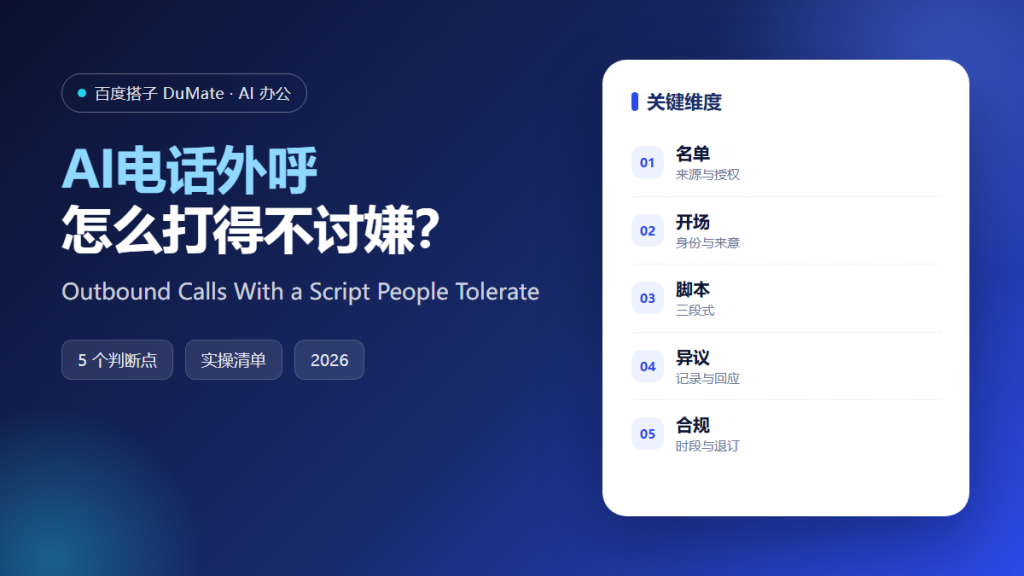
AI电话外呼 lives or dies in the first eight seconds. The person answers without expecting the call, decides whether it is relevant, and only then listens to the reason. A script that opens with a product pitch skips that decision and earns a hang-up, a complaint, or a blocked number.
This guide sets out a calling design for AI电话外呼 that states who is calling, why, and how to stop the calls, then tests whether the message survives a distracted listener.
Key Takeaways
- Call only people with a lawful basis to hear from you.
- AI电话外呼 should state identity and purpose in the first sentence.
- Ask permission before describing an offer.
- Respect time windows and honor do-not-call requests at once.
- Log the outcome together with the exact wording used.
Why AI电话外呼 Needs Consent Before Content
The legal basis differs by market and by audience. An existing customer relationship, a web form with clear wording, and a business contact list each carry different rules about who may be called and when. Teams that skip this step tend to discover the problem through complaints rather than through a review, and AI电话外呼 makes poor calls easier to produce at volume.
Reputation is the second reason. A single number that generates complaints gets labeled, blocked, or filtered, which raises the failure rate for every future campaign. Careful pacing and honest opening lines protect an asset that takes months to rebuild, and no script improvement recovers a number that carriers have already flagged.
The third reason is usefulness. A call with a stated purpose produces a real outcome: an appointment, a decision, a callback at a better time, or a clear refusal. A call that only measures duration produces a report that flatters the campaign and teaches the team nothing. AI电话外呼 that produces appointments rather than minutes is easier to defend when the budget is reviewed.
How AI电话外呼 Works in Five Steps
Step 1: Build an eligible list
Document the source of every number, the date of consent or the existing relationship, and the time zone. Remove duplicates and numbers on internal suppression lists before dialing. If the basis is unclear for a record, leave it out rather than testing it on a live call.
Step 2: Open with identity and purpose
Say who is calling, on behalf of which company, and why in one short sentence. If the call is automated, say so. Then ask whether now is a reasonable moment. AI电话外呼 should never pretend to be a person, because the discovery destroys any trust the rest of the call might build.
Step 3: Ask one question at a time
Long scripts fail on the phone because listeners cannot re-read them. Break the message into single questions with short pauses, and let each answer set the next line. Keep a written branch for yes, no, and not now, and let anything else go to a person. Silence is information too, so allow two seconds before filling it.
Step 4: Prepare three endings
Write a clear ending for interest, for refusal, and for a wrong number. The refusal ending matters most: thank the person, confirm that the number will be removed, and stop. A script that argues with a no turns a neutral contact into a complaint. Rehearse the refusal line until it sounds like a courtesy rather than a formality.
Step 5: Log and honor opt-outs
Record the outcome, the consent basis, the time of the call, and the recording reference. Suppression requests must reach every list the same day, not at the end of the quarter. AI电话外呼 systems that share one suppression table avoid the embarrassing second call after a promise to stop.
‘ alt=’AI电话外呼 checklist: consent basis, opening lines and opt-out handling’ />
A Calling Checklist for AI电话外呼
- Every number has a documented lawful basis.
- Calls stay inside permitted hours and local time.
- The opening names the company and the purpose.
- A refusal ends the call and triggers removal.
- Recordings and outcomes are retained as required.
Where AI电话外呼 Fails
It fails when the script is judged by call length rather than by outcomes, and it fails when compliance is treated as a document instead of a daily process. AI电话外呼 rarely causes the worst incidents on its own; a rushed campaign plan usually does.
- Lists bought without a traceable source.
- Openings that hide the automated nature of the call.
- Retry logic that ignores a previous refusal.
- No review of recordings after a complaint.
Before and After
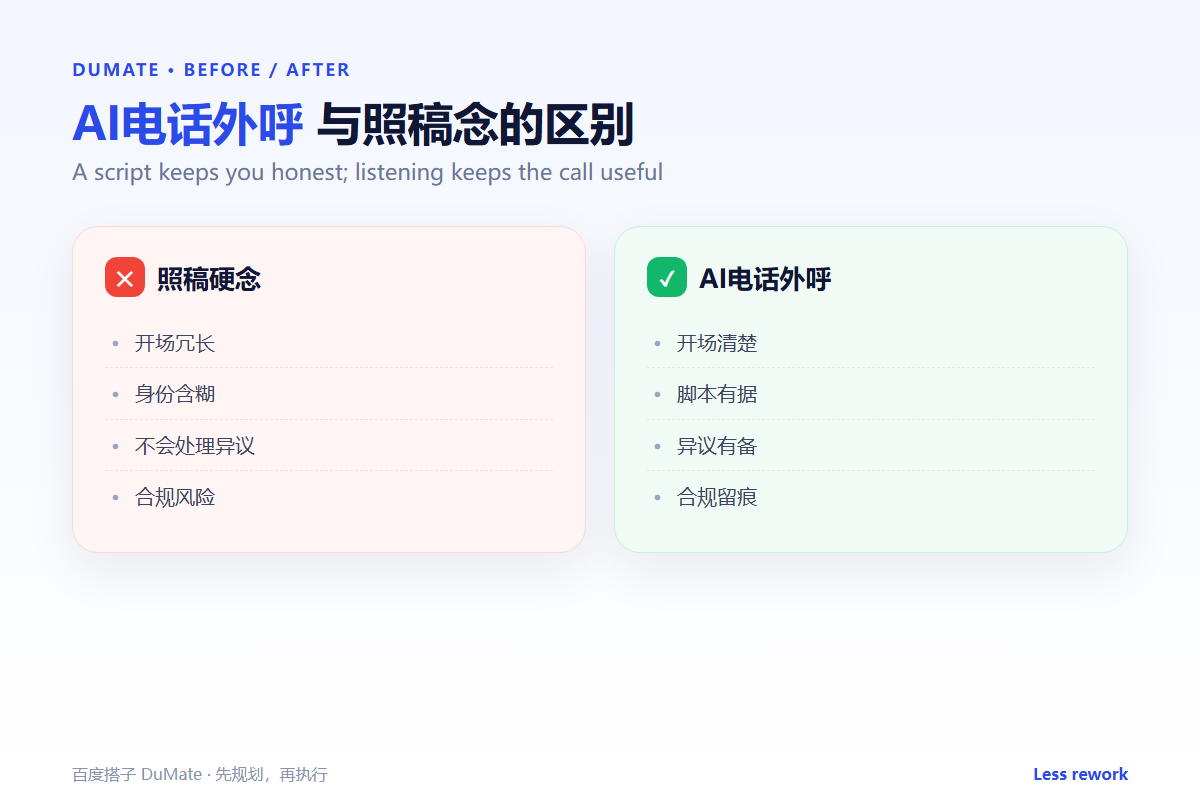
Before, a services company measured success by calls per hour. Agents read a long introduction, were interrupted halfway, and logged most outcomes as unclear. The suppression list lived in a spreadsheet that only one person updated.
After, AI电话外呼 used a two-sentence opening, asked permission, and offered three endings. Call volume fell by half, appointments rose, and complaints dropped to almost none. The team also learned which questions produced useful answers, something the old reports never showed. The savings came from fewer wasted calls, not from faster dialing.
FAQ
Should AI电话外呼 say that the call is automated?
Yes, at the start. Disclosure costs a few seconds and prevents the far larger cost of a customer discovering it later.
How many attempts are reasonable?
Fewer than most teams assume. Two attempts on separate days is enough for many campaigns, and a refusal means zero.
What should be recorded?
The consent basis, the time, the outcome, and the recording. Keep them long enough to answer a complaint or an audit, and no longer. A short retention rule is easier to follow than a vague one.
延伸阅读
Segment the list using customer profile data, and forecast the outcome with sales forecast. User segmentation keeps quiet hours and offer rules manageable, legal consultation clarifies the consent basis, and churn warning shows when a polite call is the wrong move. External references: NIST AI Risk Management Framework and ISO/IEC 42001.
评论
还没有评论,来说两句吧。